
In the Sala de Estar
Thank you for coming. Or… did I come here?
The ceiling was painted after the last visit (whoever was visiting and whoever was truly living here), a brighter shade of white; the fluorescent tubes were replaced with pendant lamps; the stairs gained an anti-slip carpeted finish.
There is a pleasant aroma of bergamot from an air diffuser in the hall. It is raining outside.
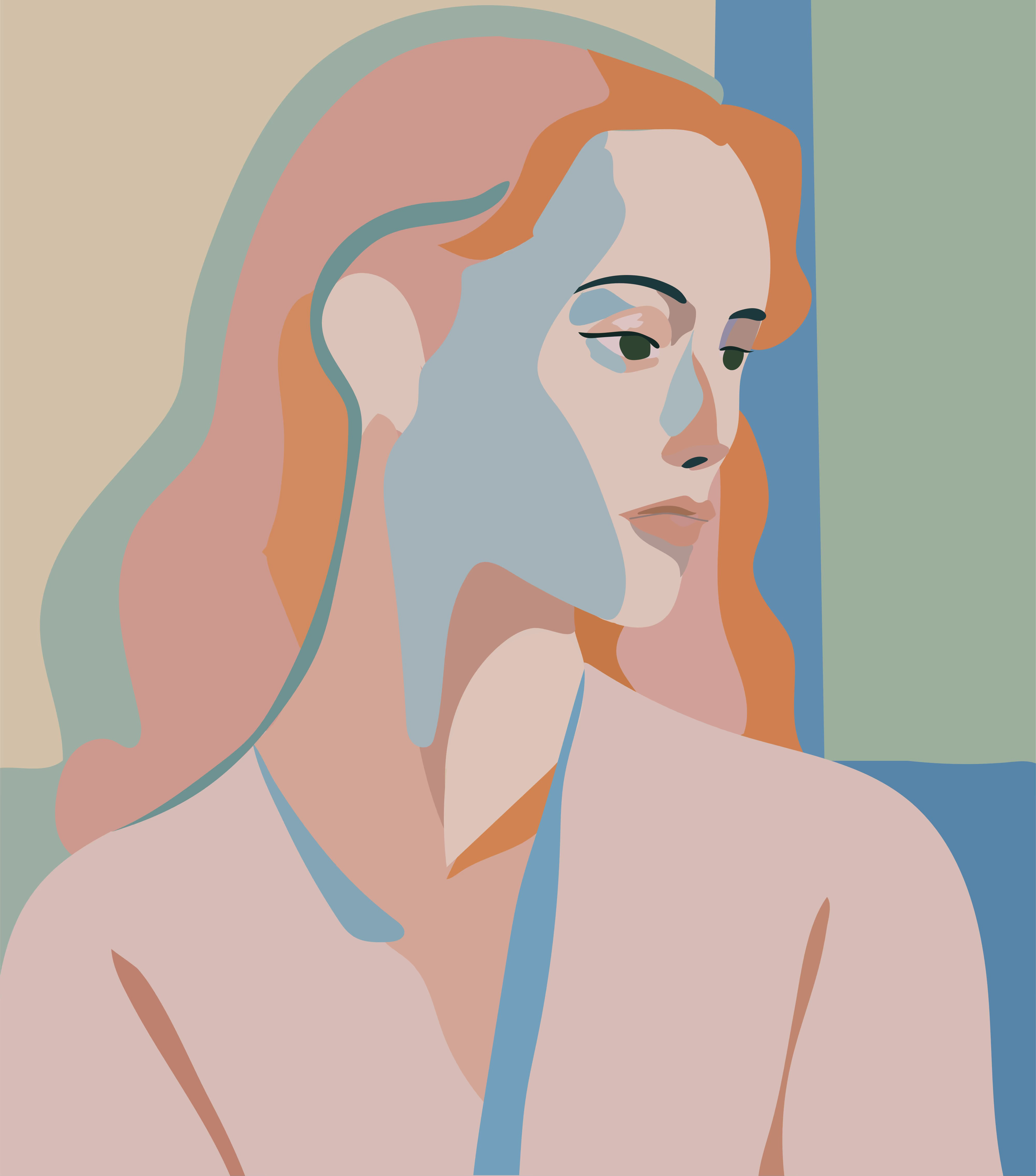
We move to the salon, the sala de estar.
No, the stars are not out yet; it is still early. Sala, room—spacious enough for living.
“Can you just sit?” I wonder, extending my hand in your direction, encouraging you to take a seat.
“Just sit and be?” you ask.
“Just be. I will serve tea. This is where all the stirring will go.”
Nothing apart from the rain outside makes a sound, nothing apart from your heartbeat to tell you that you’re alive.
Can you feel that you’re alive simply by sitting quietly?
You are unsure.
It has been a long time since you meditated, rather than merely talked about getting an app for that. I really don’t want to talk about myself, uttering: I can sit so long that I feel the world exhale with me, and I am both less and infinitely more than I imagined.
I don’t speak because I am alive; I am alive not because I speak.
“So you said some time ago—ages, one might say—that you collect stamps.”
Oh! My mind is on, truly on. Worldwide collection, expedition, postage, stamps—or love (as in philately). Collectionner les timbres. Coleccionar sellos. Collezionare francobolli. Samla frimärken.
How do I tell you that it is not about the stamps at all?
Will you ask me what, then, it is about?
Will I tell you that it is about the album? Or will I tell you not?
You are thinking of your first notebook (no, not a computer), a paper cahier de brouillon (not bouillon—I might serve the soup later, though), where you copied all the interesting quotes. We do not talk about books. I was never in any kind of adult book club. I am not sure how I would bear the whole concept, not even thinking of its implications. I bring my old notebook and pass it to you. You open it on the first page. You read (in French):
“Sublimity, then, is perception. Without sensitivity, intelligence becomes machinery”, you begin.
I put the music on. Your choice, of course, is mine at once. To receive without giving makes one heavy; to give without receiving makes one hollow.
I give you a nodding look. And then intuition — that mysterious, “obscure” light? I tend to ask. Not everything luminous is clear. But that remains unspoken.
“Tenderness…”
“We are not entering there. A single act of tenderness can outweigh a decade of achievement.”
Give without restraint, lose without regret, and acquire without pettiness. You must have that inner wealth to give freely; that’s why you are sitting here. You have the security to acquire without shrinking into smallness.
“We settle not because we cannot imagine beauty, but because we once imagined it too vividly. Disappointment makes us practical. Fear makes us moderate.”
“Mhm,” I confirm.
And then you throw out of nowhere, ‘You think you control your own decisions’.
And I really don’t know what to answer.
Don’t you? This is the moment when one juggles in his head how much of “we” there is…
…
Yes, my brain gets compromised at this moment, running a script, as if Lem were talking to me.
If you asked me, I would have told you that Solaris was the first science fiction book I read in my life and that it had a tremendous impact on me and that, of course, I wouldn’t think that I would actualy be a science-fiction reader, even once, and my initial instinct would be to read it so I’d gain some kind of a common ground with the boys at the time. But then I wouldn’t be talking about that excellent book, but about what came to my mind right now.
Humanity…
I catch myself on that! I wouldn’t tell you that because that’s a massive subject to talk to you about, so I just quickly ran a script. It is like Lem must speak to me, but before he does, I try to dismiss the thought because I am not searching for a definition. But the thought is insistent, and I finally hear in my head: Humanity is the sum of our defects, our shortcomings, our imperfections. It is what we want to be but cannot be, are unable to be, do not know how to be. It is simply the gap between ideals and their realisation.
Mhm.
Of course, I do not realise that you came to talk to me about what the Nobel Prize winner John Nash, who spent 44 years proving something about our choices, discovered.
“Our choices are governed by a hidden system — game theory. Once you understand it, you begin to see it everywhere, and you start looking at every past decision differently.”
At this moment, I am curious, not because I perfectly know who Nash was, but because I am interested in how you want to put it, the whole story of how a 22 years old wrote a 28-page doctoral thesis that changed science and should effectively change me, change us, if “us” existed in the first place, of course. Will you disclose that he was struggling with schizophrenia and lived in isolation for years, or will you straightforwardly focus on the foundation for predicting human behaviour, a phenomenon called the Nash Equilibrium?
“To the point”, I encourage you to speak.
“It is the point at which no one can improve their situation by changing strategy — as long as everyone else continues acting the same way.”
I wait to hear how today this idea quietly influences what I buy, what I watch, who I meet, and how I make decisions. You would say we, of course, if we, in a sense less broad than humanity, existed. And I know you will give a real-life example. So you do, and it is an appropriate one:
“You approach traffic lights.
Red — you stop.
Green — you go.
Why?”
You wait a second for reply so I reply, engaged: “Because I assume other drivers follow the rules too.”
“If one person starts acting differently —do they win?”
“No.”
“Chaos follows—And that is the Nash Equilibrium—It is everywhere around us. Why do Coca-Cola and Pepsi cost roughly the same?”
“Again — Nash Equilibrium?” I guess correctly.
“If Coca-Cola lowers its price, Pepsi must do the same. If Pepsi raises its price, it loses customers.
The result?
Both companies remain at the same level and cannot change prices without losing money.
And this is where it becomes uncomfortable.”
“Companies realised that Nash’s theory could be used to trap people in bad decisions,” I conclude.
“And now.” I try to follow your hand that will illustrate what you are about to say.“The sunk cost fallacy.”
“Once you understand how it works, you start to feel uneasy.”
A lot of feeling uneasy, but what could I say to that? I feel like a shabby curate who has strayed by mistake into a drawing room full of dukes? (Going after Auden and expressing as poetically as I could what I felt today at 2:54 pm upon question 21 in higher tier maths paper, by the way). “So what is the sunk cost fallacy?” I ask.
“We continue something simply because we have already invested time, money, or energy into it.” Sounds what Little Prince said about the rose, I think. and you continue: ‘“Even if stopping would be more rational. Nash proved this mathematically. Companies turned it into a money-making machine.”
I really do not want another mathematical theory today so you throw an example, a real one, of Spotify.
“Spotify perfected this mechanism. The free version is intentionally inconvenient: limited skips, ads every few songs. Premium — so much and so per month — removes the artificially created discomfort. The result? 246 million users. 90% of revenue comes from Premium.”
So what you are saying is that Spotify doesn’t really sell music; it sells relief from the discomfort it creates itself?
“Demand through discomfort.”
“Companies deliberately make free versions slightly frustrating. If they were too good — you wouldn’t buy the paid version.”
“The free option irritates you just enough to make you want to pay.” Here, of course, I don’t tell you that some people try to get on a family membership (up to 6?), even if they do not live at the same address. Instead I say: “Brilliant? Yes. Ethical? Debatable. And yet… Nash himself fell into the “sunk cost” trap.”
“You are perfectly right. During his PhD, he realised it wasn’t his path — but he continued because it seemed a waste of the 4–5 years he had already invested.”
“Even the man who discovered the mechanism became its victim.”
No to finish on a dead end, you continue with the Prisoner’s Dilemma.
“Two players. Two options: cooperate or betray.”
I already like the example, although you need no encouragement to continue:
– If both cooperate — each gets £10.
– If both betray — each gets £0.
– If one betrays — they get £15 and the other loses £5.
Logic suggests: betray. But in the long run… both lose.”
“Cooperation wins”, I say without sounding triumphant.
“The best strategy”.
“This being said, be kind, be strong — respond to betrayal. Be forgiving — return to cooperation, don’t fight over resources, is it the moment I serve the broth, my famous chicken soup?”


