

Appointment and Disappointment. Dates and Timeless Offerings

Grand Central Station. Lieutenant John Blandford waits anxiously:
“Six minutes to six, said the clock… His heart was pounding with a beat that choked him.”
He is about to meet a woman who has become deeply important to him—yet one he has never seen. For 18 months, their relationship has existed entirely through letters.
“The woman he had never seen yet whose words had sustained him unfailingly.”
Their connection began with a book—Of Human Bondage—which Blandford found in a military library. What struck him were handwritten notes in the margins:
“He had never believed that a woman could see into a man’s heart so tenderly, so understandingly.”
After that “meeting of minds”, he reaches out to her—Hollis Meynell—and they begin writing. Even when his letters fail to arrive, she continues:
“When his letters did not arrive, she wrote anyway…”
One of the most significant elements of the story is Hollis’s refusal to send a photograph. “If your feeling for me had no reality, what I look like won’t matter (…) Suppose I am beautiful… I’d always be haunted that you had been taking a chance on just that. Suppose that I’m plain… then I’d always fear that you were going on writing because you were lonely…
In one of the most powerful moments, Blandford recalls a battle scene. Surrounded by danger, he remembers her words:
“Of course you fear… all brave men do.”
“He had remembered; he had heard her imagined voice, and it had renewed his strength and skill.”
Back in the station, the tension builds. Blandford watches every woman carefully, searching for the agreed signal: a red rose.
Then, suddenly, a young woman appears:
“Her figure was long and slim… she was like springtime come alive.”
She seems to embody everything one might expect from romantic fantasy. For a moment, Blandford is drawn toward her:
“Uncontrollably, he made one step closer to her.”
But then he sees the truth.
Behind her stands another woman—older, plainly dressed, “well past 40,” wearing the red rose.
“She was more than plump… her thick-ankled feet… her crumpled coat.”
This is the true “appointment with love”, a confrontation with values. Blandford experiences a sharp internal division:
“He felt as though he were being split in two…”
On one side: physical attraction, youth, beauty.
On the other hand: loyalty, gratitude, emotional truth.
And he chooses.
“Lieutenant Blandford did not hesitate.”
He approaches the older woman, offering respect and kindness:
“This would not be love, but it would be something precious… a friendship… rarer than love.”
Then comes the final revelation:
“That young lady in the green suit… begged me to wear this rose… She said it was some kind of a test.”
Hollis Meynell, the beautiful young woman, had staged the encounter.
She wanted to know if he would choose the person he believed her to be.
The voice behind the face comes from “Appointment with Love” by Sulamith Ish-Kishor, which I read after D. Whyte’s wise and timeless article “Unrequited”, where he writes that unrequited love is the love human beings experience most of the time, and as suggested, they are not satisfied with it. “Men and women have always had difficulty with the way a love returned hardly ever resembles a love given. The great discipline seems to be to give up wanting to control the manner in which we are requited, and to forgo the natural disappointment that flows from expecting an exact and measured reciprocation (…) the difficulty and the revelation and the gift (is then) to see love as the ultimate in giving and letting go – and through the doorway of that affection make the most difficult sacrifice of all, giving away the very thing we want to hold forever.”
Love is not wrong there. It is the belief of reciprocity, as imagined, expected. ‘Belief’, as I use the word here, is the insistence that the truth is what one would “lief” (as “happily; as gladly”) or wish it to be. The believer will open his mind to the truth on condition that it fits in with his preconceived ideas and wishes.
In this viewing, we don’t need to believe in Love; we must have, or rather put faith in it, the truth about it, whatever it may turn out to be. Faith has no preconceptions; it is a plunge into the unknown. Belief clings, but faith lets go. In this sense of the word, faith is the essential virtue of Love.
Most people believe in love to feel secure, in order to make their individual lives seem valuable and meaningful. Belief has thus become an attempt to hang on to love, to grasp and keep it for one’s own.
But again, you cannot understand love, and most importantly, experience, live and feel it as long as you try to grasp it. Indeed, you cannot grasp it, just as you cannot walk off with a river in a bucket. If you try to capture running water in a bucket, it is clear that you do not understand it and that you will always be disappointed, for in the bucket, the water does not run. To “have” running water, you must let go of it and let it run. The same is true of Love.

The present phase of human thought and the history of Love is especially ripe for this “letting go.”
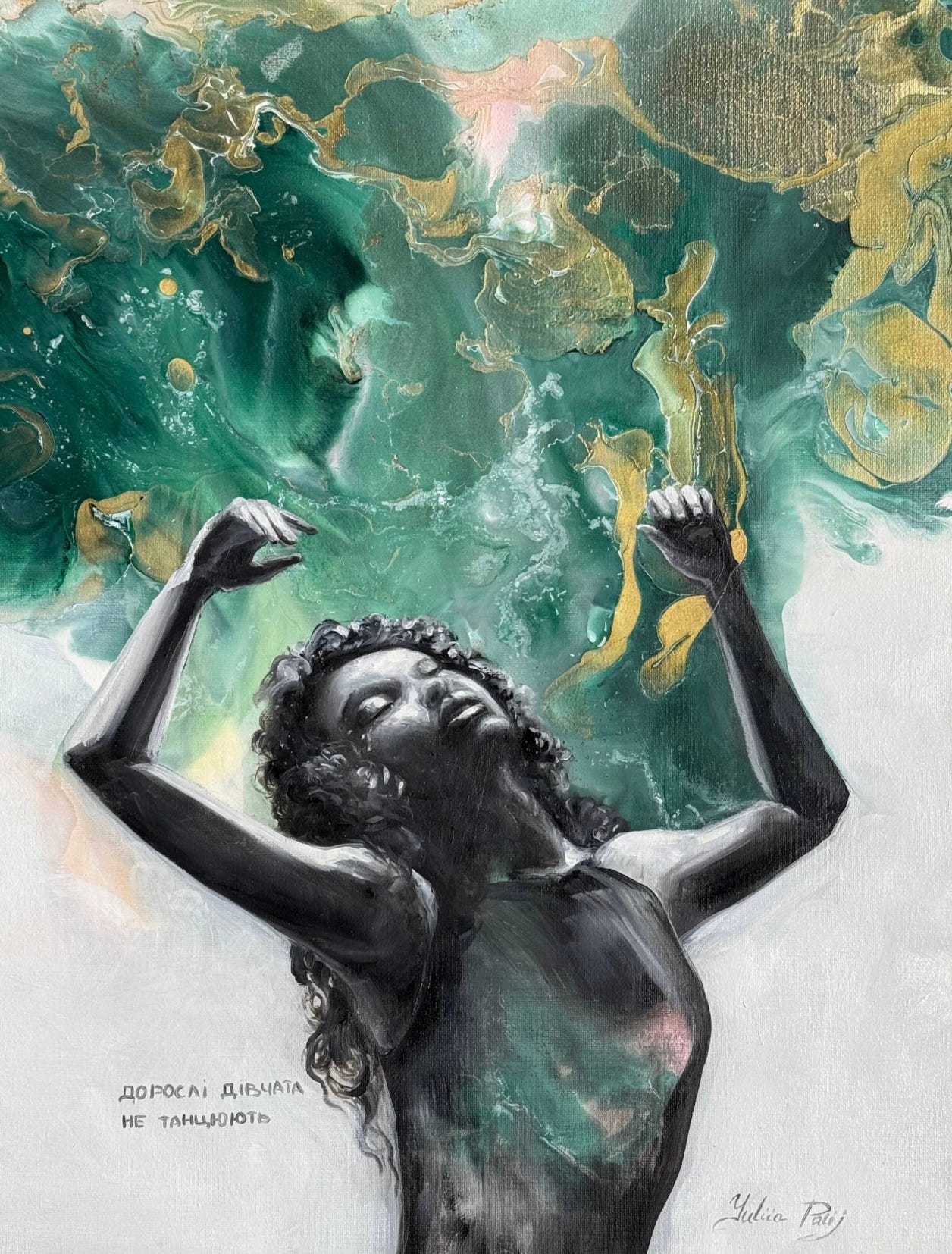

Sight and Disappointment
If the surest way to preserve something
Is to erase it,
Then let me begin with sight—
That fragile theorem we trust.
So you looked,
The way a child believes in mirrors:
That’s what returns is truth polished into glass.
Disappointment, then, is a cork,
necessarily removed from a bathtub
Of pleasant yet finite things.
Sight limits an infinite series
Where we must be adding term after term,
Absence of the sum that settles.
Presence of expansion.
So if the only way to preserve
Is to erase—
Let me be the sudden undoing of containment,
Let the water shower us—
Falling, always falling,
Yet never lost
Only freed
Into a form
Our sight
Cannot imprison.