
Back to The Hive
A Summer-Dec Story

It doesn’t happen, not in this town. Until it does. And the first time it happens, no one realises what they’re witnessing. Not even later, when the vanishings dominate the headlines, do the people in the park realise they were there — front row — when it began.
It takes place outside, on the kind of summer afternoon where heat is so intense that bored children crack eggs open on sizzling car bonnets, marvelling at the hardening glisten of the yolk. In a park at the edge of the town, mothers sit under the shade of leafy trees, hushing their babies or pressing their noses to tiny wriggling toes, inhaling that sweet, damp newborn smell. The grass is brittle and thirsty. Sunhats, tubes of fruit yoghurt, iced coffees, sticky fingers.
One mother sits with her toddler and his latest obsession: Bluey. He squeals when she nudges him with her shoulder, acting out the game from yesterday’s episode. A month ago, Peppa Pig was the only thing he cared about — until he discovered the Heeler family and refused to watch anything else. He once wailed because Peppa got muddy; now he cheers when Bluey gets messy.
She is the closest to it — and yet she notices nothing.
There is a muffled sort of bang, like a sack of flour hitting the floor. Heads pop up, curious. The sound comes from a copse of trees hugging a shallow lake. The toddler screams, and she scoops him up, shushing, stacking snacks and bottles into the stroller one-handed. They move away. By the time he calms down, they have — both — forgotten.
Life resumes: the jingle of an ice-cream van, laughter, yawning heat. Who would go poking around a mosquito-ridden lake anyway?
And so, no one reacts, and no one notices the thick, smoky cloud rising from the trees. The mass breaks apart, scattering like a black wave across the sky.
Nothing changes.
Yet.
Days later, MISSING posters sprout like fungus. Jolly: mother, wife, last seen in this park. But Jolly is neither young nor beautiful, and sympathy follows beauty. Soon her face is joined by others. Six in total by autumn. People mutter about police incompetence, about losing one of the only pleasant places left in the heat-choked city.
Then comes the spark. A lonely bachelor complains to a reporter — why should he lose the park’s peace? Why must he walk in groups like a frightened child?
Why talk to the families? They are strangers.
The internet explodes. The missing women, the heartless parkgoers, the useless police. And armchair detectives begin their favourite pastime: connecting dots no one else asked them to connect.
Not seven. Hundreds.
Vanishing everywhere.
No bodies. No answers.
Swarms that move like thought. A hair-curling, mournful thrum that vibrates straight into bone marrow. Sightings increase. The bees grow aggressive. They stalk doorways. They chase. They kill. The more women disappear, the more furious the bees become.
Scientists argue with priests.
The King mocks them both.
Households crumble without women.
And grief becomes a permanent resident.
Until someone decides:
It’s the bees or us.
A year after that, mother — what was her name? — sat in that park, the country becomes a machine of extermination. Tubes, nozzles, sealed homes, sirens, gas masks. 11 a.m.
Silence.
Then:
Screams.
Millions of bees convulsing, dying, burning with invisible fire. Their agony has a smell: rotting cabbage. A sound: a drowning child. Then they are gone. No bodies. Just absence.
Victory, the King proclaims.
Until —
Pop. Pop. Pop.
The women vanish faster. Hungrier. Angrier.
Great plumes rise across the landscape, a dark smog eating the sun. The bees return — vast enough to eclipse daylight.
And something happens beneath the ground.
It took months for investigators to risk stepping foot near the lake. By then, the bees’ rage made the outdoors a hostile territory — the slightest disturbance, and the sky itself would scream. Still, search teams knew the disappearances had to start somewhere. And everything pointed back to that stinking patch of water where mothers had once picnicked like nothing was growing beneath them.
The first anomaly was uncovered by accident. A heat map taken during a drone sweep revealed an immense, pulsing shape beneath the lake, hotter than any natural formation should be. Too symmetrical. Too alive.
They called in the geologists, who insisted no cavern system existed below the park.
They called in the engineers, whose drills burned out as if cutting bone, not soil.
They called in the religious leaders, who refused to even look at the images.
Finally, the King approved the first dig.
When the machinery broke through, it didn’t feel like soil collapsing — it felt like a lung deflating, a heavy exhale. A cavern yawned open, and what filtered out was neither air nor gas but a whispering hum, like voices layered over one another, speaking a single syllable:
Back.
Hazmat-clad soldiers lowered themselves inside.
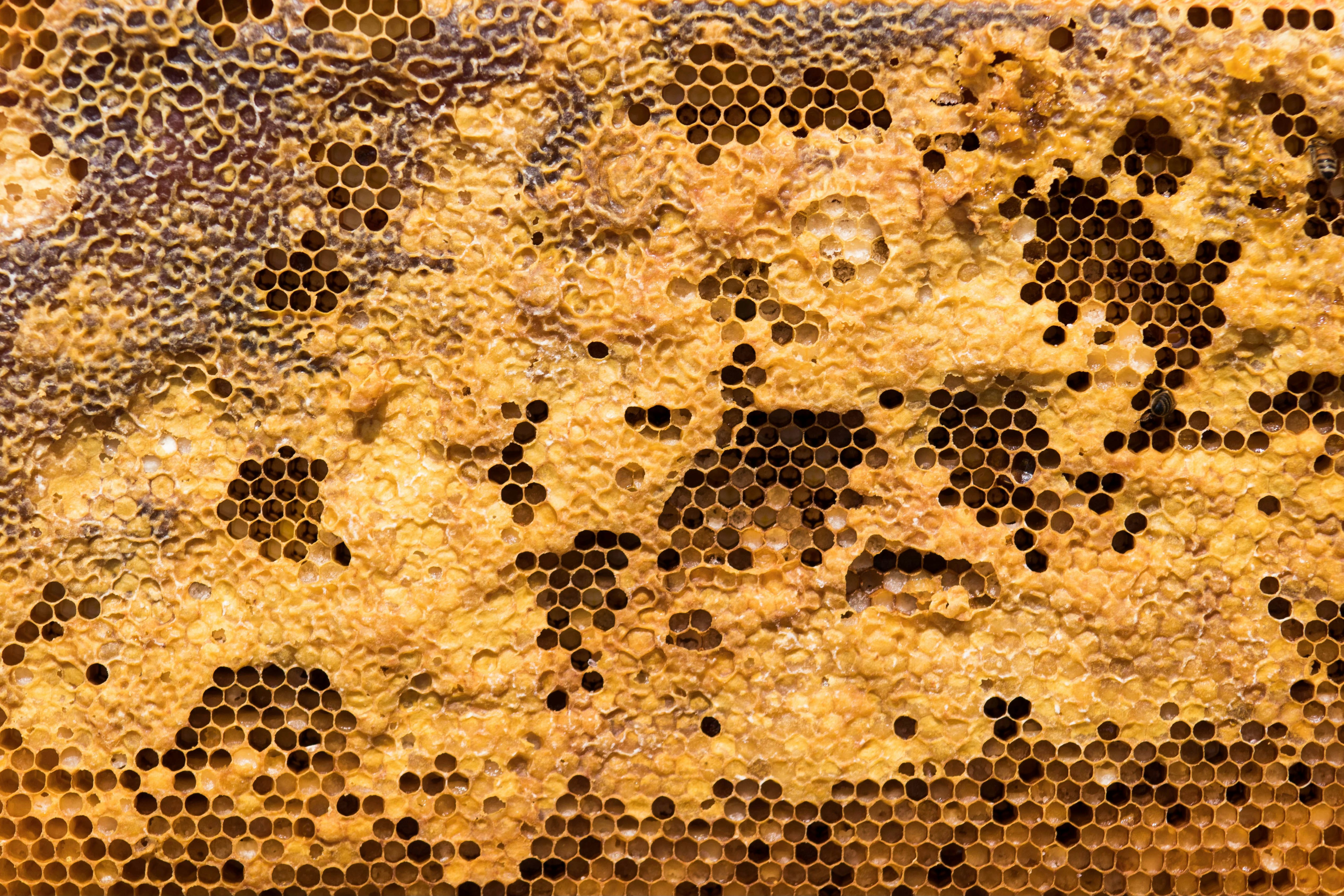
They found tunnels — hundreds of them — smooth-walled and spiraling deeper. The walls glistened like honeycomb, but not golden. Black. Veined. Pulsing with a heartbeat that wasn’t theirs.
Inside those tunnels, they found the missing women.
But not as remains.
Not yet.
Hundreds upon hundreds of them stood upright, pressed into the hive walls as though swallowed mid–breath. Their eyes were open, glassy but aware — a terrible lucidity. Each woman was webbed in by hardened resin, her limbs immobilised, chest barely rising. A thousand tiny bees crawled over their skin, breathing honey into their mouths, down their throats, sustaining them on sweetness they never chose.
They weren’t prisoners.
They were queens-in-the-making.
A scientist — one of the few courageous enough to step closer — noticed a transformation on a woman’s back: raised ridges along her spine, curling like unfurled wings beneath the skin. As he watched, the ridges twitched.
The hive responded.
A tremor rippled through the walls. From the cavern ceiling descended the Matriarch — the first bee to evolve beyond bee, crowned with a face shaped disturbingly like the missing woman with that jolly name, though elongated, sharpened, perfected into something more insect than human. She landed near the soldier who was closest to the wall.
The hive fell silent.
And then — with a grotesque kind of ceremony — she touched her human cheek to his mask as if blessing him.
He died screaming.
Not stung. Not torn.
But drained, his skin collapsing like a sucked-out honey pouch. The Matriarch fed.
The soldiers fired. The bullets did nothing — each projectile swallowed whole by a sudden bloom of bees from her abdomen, a black shield of living armour.
Their escape was frantic and unplanned. Several never made it back to the surface — their bodies were dragged down mid-rope, their legs kicking only for a moment before the hive wall opened and accepted them.
Those who survived brought back footage.
The government buried it immediately.
But rumours leaked. They always do.
Whispers spread that the women weren’t taken as victims — but as replacements.
That humanity’s time as the dominant species was never guaranteed.
That the bees, once nature’s servants, had evolved to repay debts long ignored.
Scientists quietly theorised that the hive was not merely underground:
It was growing.
Expanding beneath cities, beneath homes, beneath the very streets people still dared to walk.
Every woman taken wasn’t gone.
She was transforming.
Becoming new queens.
Becoming the army.
Waiting for the day the sun would dim —
and they would emerge, not as humans reborn…
…but as the future that replaces us.


There is something wonderful and terrible in your writing--a tension and suspense that is rare. You see things that others miss. In a way, this story is about that. Thank you for writing things down and sharing them. Your words are proof that the hive is real and alive, and that quiet battles rage beneath the surface of things.
Wow! Love this! Great plot.